Train on the exact objects your robot will touch.
Each pack is a themed set of 10–20 real, physical items — shipped to your lab — together with their scan-accurate digital twins: SimReady USD assets, scanned by us and validated in Isaac Sim. Train the policy in simulation, evaluate and deploy on the same objects sitting on your bench. No lookalikes, no object gap.
Request the catalog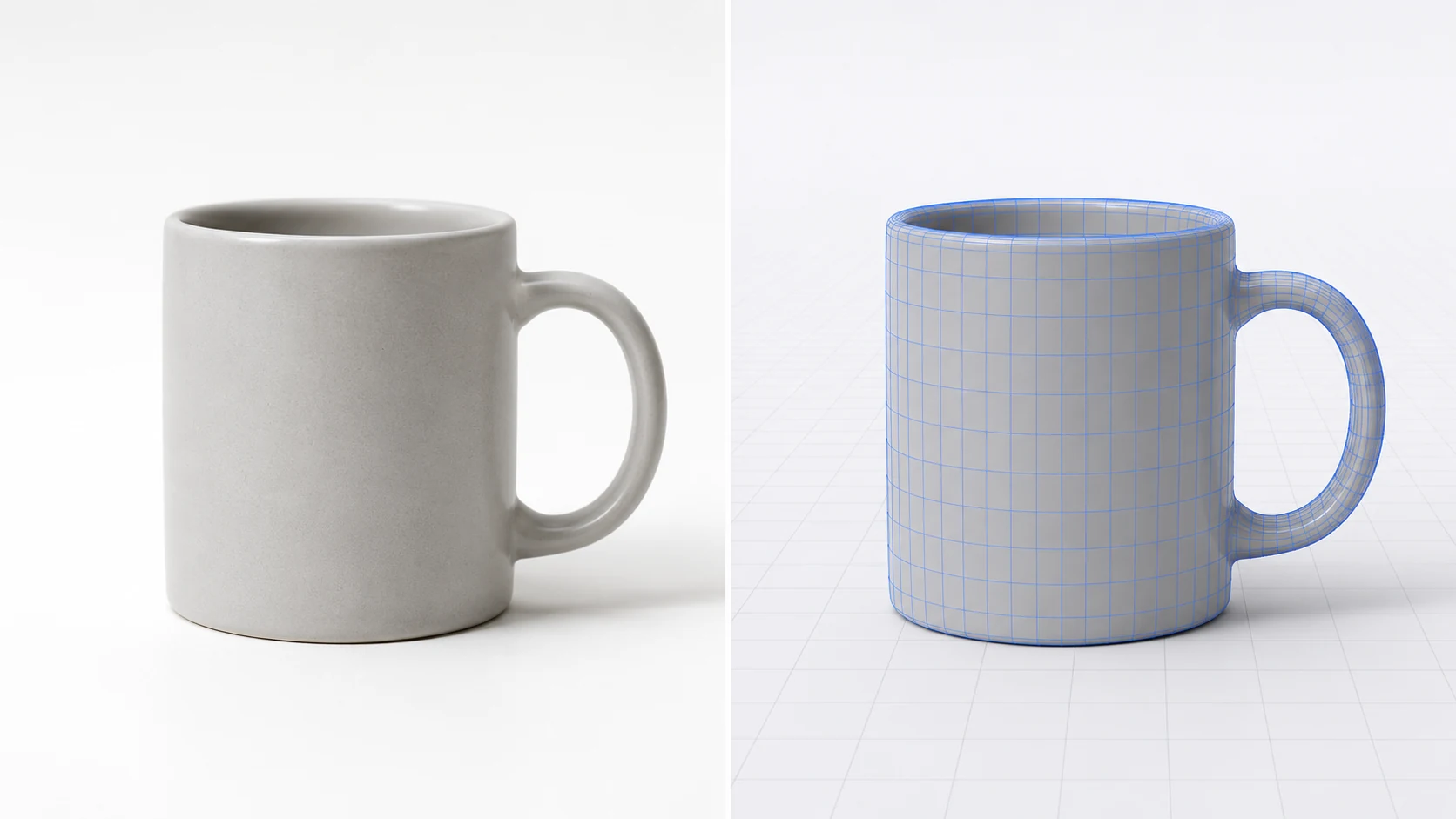
Themed sets, built for training tasks.

Tabletop manipulation staples: mugs, bowls, containers, utensils. The classic pick-and-place, pouring, and sorting territory.
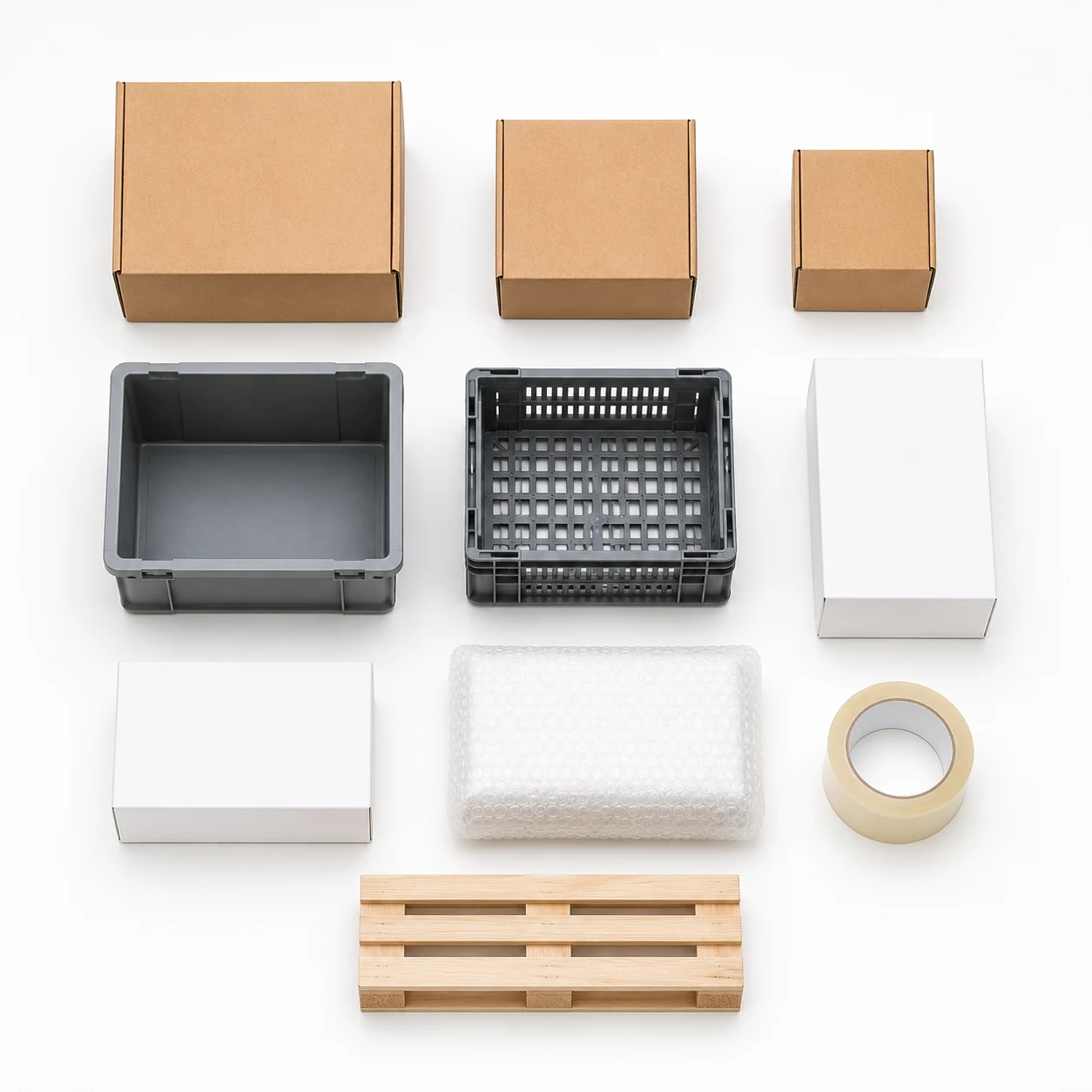
Boxes, bins, packaged goods, and handling items for logistics-flavored tasks: picking, stacking, bin-to-bin transfer.

Desk-scale objects: stationery, small electronics, everyday clutter. Fine-grasp and tidy-up tasks in office scenes.
Your deployment objects, twinned. Ship us the items — or send a spec and we source them — and we return the physical set plus validated SimReady twins.
Prices are starting points for the first catalog batch — final quote depends on item list and licensing. Pack contents are finalized per batch; request the catalog for current item lists.
Lookalike assets break policies.
Manipulation policies are trained in simulation on one set of objects and deployed against another. A generic CAD mug is not your mug — the geometry, mass, and surface differ just enough that grasps trained in sim slip in the real world. The research community has leaned on matched physical–digital object sets for a decade, because they work — but the established benchmark sets are fixed, aging catalogs, not the objects your deployment actually needs.
Object gap
Policies overfit to the assets they were trained on. When the real object differs from its sim stand-in, success rates drop at exactly the moment they're measured.
Prep overhead
Sourcing objects, scanning them, converting to sim formats, tuning collision meshes and physics — weeks of effort that robotics teams shouldn't be spending off-profile.
Unfair eval
If eval objects don't match training objects, you're measuring the object gap — not the policy. Matched sets make sim results meaningful in the real world.
Text-to-3D tools now produce sim-ready files in minutes. But a generated asset has no physical counterpart: there is no object to hand your robot after training, so a real-world eval against it is impossible by definition. The correspondence between sim and reality is the one thing you can't generate.
One pack. Two copies of every object.
10–20 real items per pack, curated around a theme and shipped to your lab.
- Curated for manipulation — graspable sizes, varied geometry, rigid and semi-rigid items.
- The same units we scanned — catalog items are sourced and scanned per batch, so the twin matches what's in the box.
- Ready for real-world eval — run your sim-trained policy against the physical objects it was actually trained on.
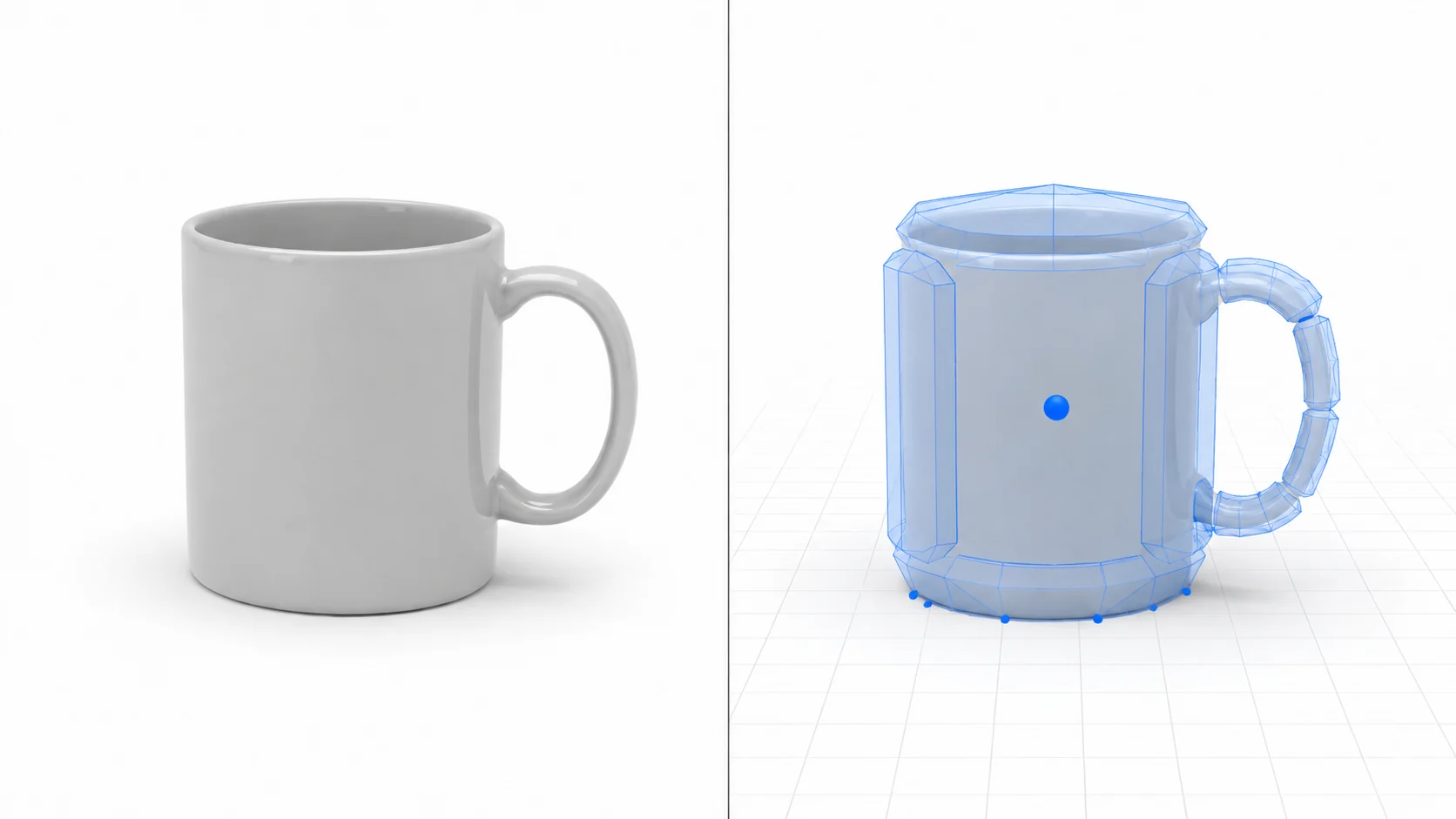
A matched SimReady USD asset for every physical item in the pack.
- Physics-ready SimReady USD — watertight collision meshes, mass, friction, physical materials; drag-and-drop into Isaac Sim and Isaac Lab. Twins that behave under physics, not just render well.
- Scan-accurate — built from 3D Gaussian Splatting and photogrammetry captures of the actual items, not stock models.
- Measured, not estimated — mass and dimensions come from scales and calipers on the physical unit, not from a model's guess.
- Validated in Isaac Sim — every asset is loaded and tested in scenes before it ships. USD is an open format; using a different simulator? Ask us.
What “SimReady” means
A regular 3D model — stock or AI-generated — is geometry and textures: it renders, but it doesn't behave. A SimReady asset adds what a physics engine needs: watertight collision meshes, mass and inertia, friction, physical materials. It's NVIDIA's standard for assets that can be dropped into a simulator and act like the real object.
Our twins meet that bar — with the physics values measured from the physical unit in the box, not estimated.
From shelf to simulator.
Asset capture and reconstruction is the same pipeline that powers SIM XR's scene work — applied at object level, with a validation pass in Isaac Sim before anything ships.
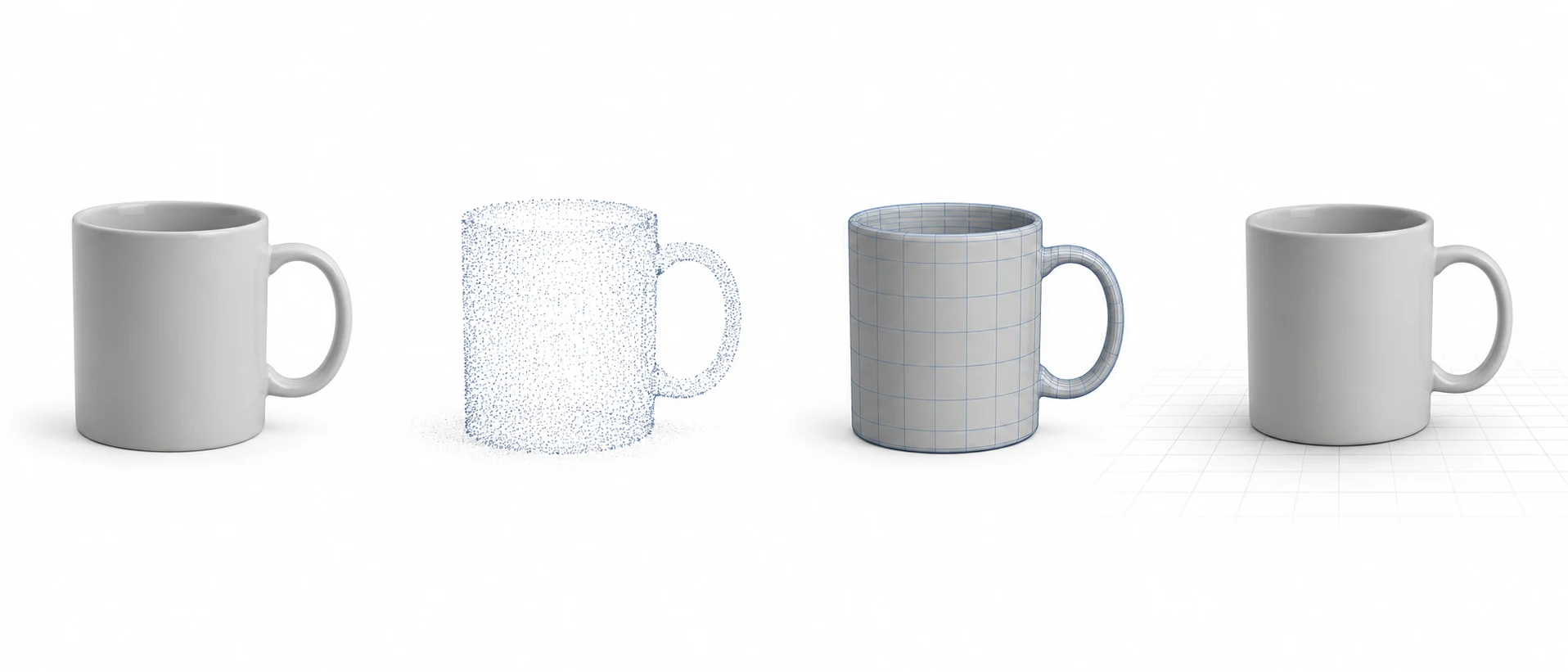
We select real items around a theme — sizes, shapes, and materials chosen for manipulation training.
Each item is captured with 3D Gaussian Splatting and photogrammetry, then weighed and measured — geometry, appearance, mass, and dimensions from the physical unit itself.
Scans become SimReady USD: watertight collision meshes, measured rigid-body parameters, physical materials.
Every asset is loaded into Isaac Sim scenes and checked before the pack ships — twins that work, not just files that open.
Teams closing the sim-to-real loop.
Training manipulation policies — VLA fine-tuning, behavior cloning, RL — who need training and eval objects that actually match.
Benchmarking sim-to-real transfer with a modern, scan-accurate object set instead of aging benchmark catalogs.
Validating robot deployments against customer-representative objects before hardware ever reaches the site.
Tell us what you're training.
We'll send the current pack catalog with item lists, twin specs, and availability — and follow up on custom packs if your objects aren't in it yet.
One reply from the team. No mailing list.
